Rubber Meets B-Road: Choosing E-Type Tyres for a Wet 2026
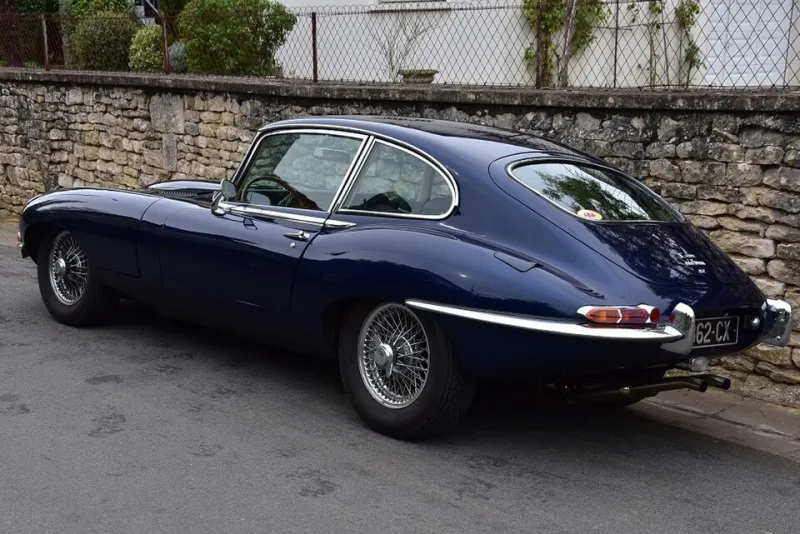
Photo: Dacia 1410 Sport, CC BY-SA 4.0, via Wikimedia Commons
Tyres are the only part of an E-Type that touches the road, and yet they are often the last thing an owner thinks about. We will spend a fortnight debating the correct shade of cam cover paint and then bolt on a set of tyres because they were cheap, local and in the right sort of size. On a car that is driven — not trailered — that is the wrong way round.
This is not a lab test. It is spanner-side advice from someone who has driven E-Types on damp Warwickshire lanes, gritty Cotswold B-roads and the odd motorway slog. The tyre market in 2026 is not what it was in 1996, and the right answer depends on whether you value period looks, wet grip, wear, or all three at once.
Sizes first, opinions second
Most standard E-Type wheels are not wide by modern standards. A 5-inch rim on an early car and a 6-inch rim on later cars call for different tyre choices. The common modern radial fitments are 185/70 R15 on standard wheels and 205/70 R15 on wider upgraded wheels. Original crossply sizes were in the 6.40-15 region, and some owners still run crossplies for originality.
Check your wheel width, not just the tyre that came off. A 205-section tyre on a narrow rim will balloon and feel vague. A 185 on a wide rim can look stretched and expose the rim to kerbs. Ask the supplier what rim width the tyre is designed for, and check the load rating against the car’s axle weights. An E-Type is not heavy by modern standards, but it is not a Mini either. A load rating around 89 or higher is typical for 185/70 R15, while 205/70 R15 tyres often carry a higher rating. Do not fit a lower rating than the original equipment or the insurer’s agreed specification without asking questions.
Crossplies versus radials on real roads
Crossplies look right. They suit the age of the car, they give that period steering feel, and on a dry day they can be charming. They also tramline, follow white lines, flat-spot if left standing, and demand more care in the wet. On a greasy B-road, a crossply E-Type is a car you drive with your fingertips and your imagination.
Modern radials are not period-correct in the strictest sense, but they are safer in the wet, quieter, and generally more durable. They also flatter the E-Type’s suspension instead of fighting it. For an owner who uses the car for weekend blasts, club runs and the occasional touring holiday, a good radial is the sensible default. For a concours car that rarely sees rain, crossplies still have a place — just be honest about when and where you drive it.
A damp B-road reality check
I spent a morning on wet B-roads in a friend’s 4.2 earlier this year. The car was on fresh radials, correctly pressured, with tubes in wire wheels. The roads were the usual British mixture: polished tarmac, wet leaves in the shaded corners, a few inches of standing water in the ruts, and a tractor’s worth of mud near every farm gate. The radials coped well. They gave warning before letting go, resisted aquaplaning at sensible speeds, and did not follow every seam in the road.
The same car on crossplies would have been a different experience. Fun, in a vintage sort of way, but you would not choose it for a wet October morning. The lesson is not that one tyre is good and the other is bad. It is that the tyre has to match the use. A car that lives on dry roads and is driven at 50mph can wear a period tyre with pride. A car that does 3,000 miles a year in all weathers needs a radial with decent wet performance.
Tubes, pressures and insurance
Wire wheels on an E-Type usually need inner tubes unless the rims have been sealed for tubeless use. Do not assume a modern tyre can be run tubeless on an old wire wheel. Check the rim, check the valve hole, and ask the supplier. Tubes add a layer of puncturing risk if they are pinched during fitting, so use a proper tyre fitter who understands wire wheels and talc the tube before assembly.
Pressures matter more than many owners admit. Start with the handbook figures for your series and adjust carefully for modern tyre construction. Too low and the car feels wallowy and overheats the tyres; too high and it skips over broken surfaces. Check them cold, and check them often.
Then there is insurance. If your E-Type is on an agreed-value policy, tell the insurer if you change from crossplies to radials, or from standard to wider wheels. Some policies specify originality or require the car to be kept in a certain condition. A modification that improves safety is still a modification. Get it noted. It is a five-minute phone call that saves a very awkward conversation after a claim.
Shortlist thinking for standard and upgraded wheels
For standard wheels, the shortlist usually includes a period-look radial such as the Blockley 185/70 R15, a premium Michelin or Pirelli option where available, and a crossply for originality. For upgraded 6-inch wheels, 205/70 R15 opens up a wider choice of modern radials. I would not pretend I have long-term tested every brand in 2026, so treat this as a starting point rather than a league table. Ask your supplier what is actually in stock, check the date codes, and avoid old stock that has been sitting in a warehouse for years.
A good rule is to buy the best wet-weather tyre you can justify for the way you use the car. If you only drive in the dry, buy for feel and looks. If you use it year-round, buy for grip and consistency. Do not buy a tyre because it was cheap and had the right numbers on the sidewall.
Buying checklist
- Confirm wheel width and offset before ordering.
- Check load rating and speed rating against your car and insurance policy.
- Decide crossply or radial based on real use, not fantasy use.
- Check whether your rims need tubes or are sealed for tubeless.
- Inspect date codes and reject old stock.
- Have wire wheels fitted by someone who knows them.
- Set pressures cold and re-check after 100 miles.
- Tell your insurer about any change from standard specification.
Tyres are not glamorous. They do not gleam at shows and nobody photographs them at a concours. But they are the difference between an E-Type that feels planted on a damp B-road and one that feels like a shopping trolley on ice. Buy for the roads you actually drive, and the car will thank you every time the heavens open.