The Spring Wrench-Over: Fifteen Safety Checks Your Exempt E-Type Still Deserves
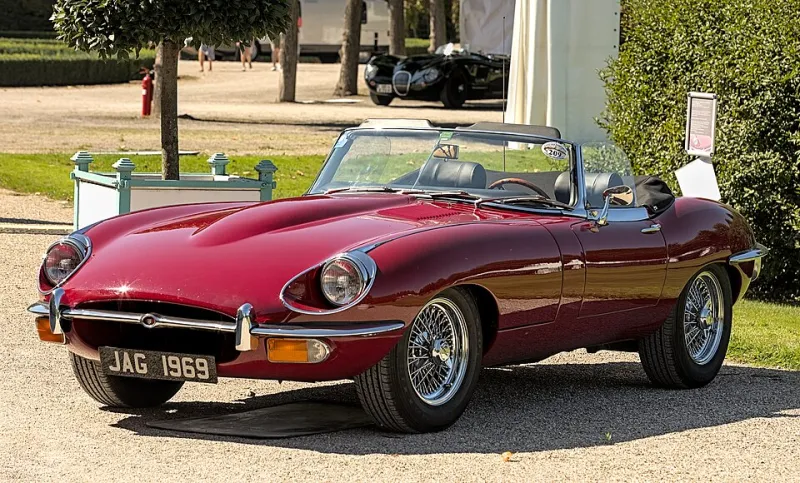
Photo: Alexander Migl, CC BY-SA 4.0, via Wikimedia Commons
Spring is the season of optimism. The salt has gone, the battery has had a trickle charger attached to it since October, and you have convinced yourself that this year you will actually use the E-Type properly. Good. Before you do, spend a morning under it. Not because the DVLA is watching, but because forty-odd-year-old brake lines do not care about paperwork.
Most E-Types now qualify for historic-vehicle MOT exemption in the UK. When you tax the car, you can declare it exempt and avoid the test. That is a sensible concession for vehicles that are used sparingly and maintained by enthusiasts. It is not a certificate of roadworthiness. The exemption simply moves the responsibility from a tester to you. Think of this as your own spring test, done in a pair of overalls rather than a waiting room.
Set aside a morning, not a fortnight
Allow three to four hours, plus a parts run if you find something grim. You will need a trolley jack, axle stands, a decent torch, a multimeter, a tyre pressure gauge, spanners, a wire brush, brake fluid, and a notebook. The notebook matters. Write down what you find, even the small stuff. A list stops you convincing yourself that a weeping brake union is just 'a bit of character'.
Work methodically. Front to back, or brakes to electrics, whichever suits your brain. The point is not to replicate an MOT bay; it is to catch the things that tend to fail on a car that sits for months and then gets driven enthusiastically.
The fifteen checks
-
Brake fluid and visible leaks. Look at the master cylinder and servo area, then the calipers. E-Type brake fluid has a habit of finding its way past old seals. If the fluid is dark or the reservoir has dropped, investigate before you drive anywhere.
-
Brake lines and flexible hoses. The long pipes under the floor are exposed to everything a British winter can throw at them. Check where clips hold moisture against the pipe. On later cars with inboard rear calipers, the lines and hoses around the IRS are fiddly to see but worth the effort.
-
Pads, discs and handbrake. Pull the wheels and look properly. The handbrake mechanism on the rear IRS can seize through lack of use. A car that passes its brakes on a dry day can still have a binding caliper waiting to ruin a summer run.
-
Steering rack mounts and track rod ends. The rack mounts perish, and worn track rod ends give that vague, wandering feel that owners sometimes blame on tyre pressures. Rock the steering while a helper watches for play.
-
Steering column and joints. Check the column bushes and the universal joints for slack or roughness. It is an old car, so some weight in the steering is normal; a clunk or notch is not.
-
Front suspension joints. Ball joints, wishbone bushes and the general condition of the front suspension matter. Look for split boots, excessive movement and fresh grease escaping where it should not.
-
Rear suspension and driveshafts. The E-Type's independent rear suspension is robust but not immortal. Check driveshaft universal joints, output shaft bearings and the condition of the cage mounts. A clonk over bumps is a clue, not a quirk.
-
Wheel bearings and knock-offs. With the wheel off the ground, check for play and roughness. If you run wire wheels, check the spinners and the condition of the splines. Do not rely on 'they felt tight last year'.
-
Tyre age and condition. Look at the DOT date code, not just the tread. A low-mileage E-Type often sits on tyres that are years older than the owner remembers. Sidewall cracks and flat spots are common. Check pressures cold and set them to the handbook figure, not the number someone on a forum swears by.
-
Lighting and signals. E-Type electrics live and die by earths and bullet connectors. Check headlamps, side lights, indicators, brake lights and the horn. Wiggle the loom near the fuse box and clean earth points while you are there.
-
Fuel hoses. Modern petrol with ethanol is not kind to old rubber. Inspect the hoses from tank to pump, filter to carbs, and the small feed pipes. Look for cracking, softening or a faint petrol smell in the boot. Replace anything doubtful.
-
Exhaust mounts and manifolds. Check the downpipes, silencer hangers and manifold nuts. Stainless systems can crack at hangers, and a blowing exhaust is both annoying and a fire risk near fuel lines.
-
Seatbelt anchors and webbing. Pull the belts right out and inspect the webbing for fraying. Check the anchor plates in the floor and sill areas for corrosion. This is one area where 'it will do' is not good enough.
-
Battery hold-down and cables. The battery should not be able to slide about. Check the clamp, the cable condition and the grommets where cables pass through panels. A loose live cable near fuel or bodywork is a bad way to end a morning.
-
Structural jacking points, sills and floors. This is the big one. Prod the jacking points, sills and floor edges with a screwdriver, but gently. If it goes through, stop and make a plan. Structural corrosion is not a cosmetic issue, and it is exactly the sort of thing an MOT tester would have refused to ignore.
Finish with a road test and a list
Once the car is back on its wheels, take it for a short, gentle drive. Brake from low speed, listen for knocks, check the steering returns cleanly and make sure the lights still work after a few miles of vibration. Then go home, make a cup of tea and turn your notebook into a proper list: safety first, then reliability, then cosmetics.
The E-Type is a wonderful thing precisely because it asks something of you. MOT exemption is a privilege, not a hall pass. A morning with a torch and a spanner is the least the old girl deserves.