Clampdown: The Cooling-System Fix That Stopped My E-Type Weeping
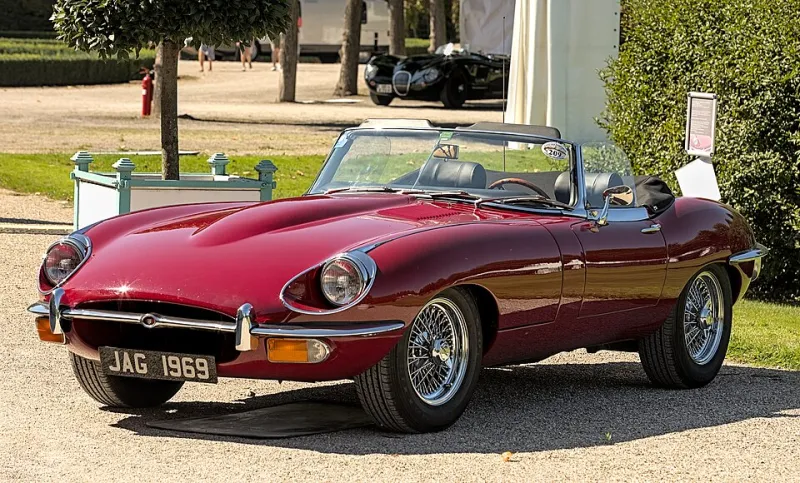
Photo: Richard Hoare , CC BY-SA 2.0, via Wikimedia Commons
The first time I found coolant under the E-Type, I did what most of us do: got a screwdriver, nipped up the Jubilee clip on the top hose, and told myself it was sorted. Three weeks later there was another thin green line on the garage floor, this time running towards the drain. The clip had not come loose. It had done something worse - it had bitten into the hose shoulder and left a neat little witness mark where the rubber was starting to fail.
That was the beginning of my conversion. Not to silicone hoses, not to a fancy alloy radiator, but to proper constant-tension clamps. It is not a glamorous upgrade. Nobody will notice it at a show. But if your E-Type is a driver, it is the kind of small, sensible change that stops a Sunday morning run turning into a coolant top-up session.
The leak that broke my patience
My car is a 1966 4.2-litre fixed-head, which means it has had sixty years of heat cycles, vibration and previous owners with varying levels of mechanical sympathy. The radiator was sound, the water pump was recent, and the hoses looked almost new. The weak point was the clamping. The top hose had been fitted with a generic worm-drive clip, and the bypass hose at the water pump had one of those shiny stainless jobs that looks lovely in the packet and less lovely once it has chewed its way through a hose edge.
I had been re-torquing the same clips every few months. That should have been the clue. A cooling system that needs regular clip checks is not a cooling system that is happy. It is a system telling you that the clamp is not maintaining load as the rubber expands and contracts.
Why worm-drive clips are a compromise
Let us be fair to the humble Jubilee clip. It is a brilliant invention, it is cheap, and it is available in every motor factor in the country. The problem is that a generic worm-drive clamp pulls from one point on the band. As the hose heats up, the rubber compresses; as it cools, it shrinks again. A simple worm-drive clip does not necessarily follow that movement with consistent pressure. It can loosen, it can concentrate load, and it can cut into the hose if the edge is not rolled properly.
On a modern car with a short service life, that is often fine. On a sixty-year-old Jaguar with long coolant hoses, an iron block and a radiator that has to cope with Coventry traffic, it is a false economy. Jubilee is a brand, not a specification. A stainless Jubilee clip is better than a cheap zinc one, but it is still not the same thing as a proper constant-tension clamp.
What I fitted instead
I went for constant-tension clamps with a spring or Belleville washer built into the fastener. The idea is simple: the clamp keeps a more even load on the hose as it changes size with temperature. I used Norma and ABA items in stainless steel with rolled edges, because I would rather spend a few pounds per clamp than replace a hose at the side of the road.
They are not period-correct. If you are building a concours car, fit the original-style clamps and accept that you will be checking them. Mine is a driver, and I want to check things less often. The constant-tension clamps are reversible, they look neat enough under the bonnet, and they do not announce themselves. That suits me fine.
Hose grades matter as much as the clamp
A good clamp on a bad hose is still a bad joint. I replaced the top hose, bottom hose and bypass hose with EPDM coolant hose from a known Jaguar specialist rather than a universal flexi hose from the local parts shop. You want reinforced EPDM rated for coolant, with the correct bore and a proper moulded shape where the original had one. SAE J20 R1 or R2 is a useful benchmark to ask about, but the real test is buying from someone who knows E-Types and can supply the right set.
Silicone hose is fine if you like it, but it is slippery and it cold-creeps, so it needs clamps that are up to the job. Do not fit silicone hoses with old worm-drive clips and expect a quiet life. Measure your stubs with a caliper before ordering clamps. Common sizes on the XK cooling system run from roughly 25-40 mm on the heater and bypass hoses up to 44-60 mm on the main radiator hoses, but check your own car rather than trusting a forum post from 2009.
Torque and technique
This is where people get into trouble. A clamp is not a cylinder head bolt. For most M5 and M6 clamp fasteners, 4-6 Nm is plenty; constant-tension clamps often want something similar, but follow the manufacturer's figure if it is supplied. Use a small torque wrench or a nut driver and stop when the clamp is snug. Do not attack it with an impact gun.
Clean the stub properly. Remove old rubber, corrosion and dried coolant. Fit the clamp so it sits just behind the hose bead, not half on it. Tighten evenly, run the engine up to temperature, let it cool, and check again. If a clamp needs repeated tightening, something else is wrong - a swollen hose, a corroded stub or a distorted neck.
The parts list I would take to the bench
- A set of stainless constant-tension clamps in the sizes you have measured.
- Correct EPDM top, bottom and bypass hoses from SNG Barratt, David Manners, Moss or your preferred Jaguar specialist.
- A new thermostat gasket if you are disturbing the housing.
- Coolant that suits your radiator and a proper flush before refilling.
- A hose pick, a mirror, a good torch and a small torque wrench.
- New header tank cap if yours is tired.
Was it worth it?
Yes, but not because the car feels faster. It does not. It is worth it because the coolant stays inside the engine, the garage floor stays drier, and I am not kneeling on the concrete every few weeks with a screwdriver. The total cost was less than a decent dinner for two, and the job took an afternoon including the flush.
The E-Type still marks its territory with the occasional oil drip, as any self-respecting old Jaguar should. But the cooling system is now one thing I do not worry about. If you are chasing a mystery weep, start with the clamps and the hose grade before you blame the radiator. The humble worm-drive clip may be a British institution, but on my car it has been retired.