The Valuation Folder: Giving Your E-Type's Agreed Value an Annual Wrench-Over
It is a Tuesday in November. The E-Type is under a cover with a dish of silica gel in the footwell, the battery is on a conditioner, and a renewal email has just landed. We will happily spend three hours underneath the car chasing a weep from the water pump, then give the insurance paperwork four minutes and a shrug. That imbalance is worth correcting, because the number printed on that schedule does more for the car's long-term survival than most of the spanners in the drawer.
The number on the schedule is a mechanical component
Agreed value is not an administrative nicety. It is the ceiling on what the car is worth to an insurer, and it decides whether your E-Type gets repaired or gets bridged.
Think about what a proper repair actually costs in 2026 money. A rear-end knock that takes out the boot floor, the rear valance and a quarter panel is a five-figure conversation before anyone has touched the paint. A bonnet alone, in aluminium, is a horrible number. Add a specialist's labour rate, a jig session, and a decent paint match on a forty-year-old cellulose or two-pack finish, and you can be well past the point where a low agreed value makes the sums look silly.
When the payout ceiling sits below what a proper repair costs, the insurer is obliged to follow the economics rather than your attachment. The car gets written off, you get a cheque for a fraction of what it would take to replace it, and a perfectly saveable E-Type quietly becomes a breaker's yard donor. That is how under-insuring becomes a mechanical risk wearing a financial hat. It is not only your wallet that suffers; it is the car.
Photograph it like you are selling it, but honestly
Insurers operating agreed-value schemes usually want a modest set of images, often six to ten, plus supporting paperwork. Give them twenty. It costs you nothing but an afternoon and a bit of battery.
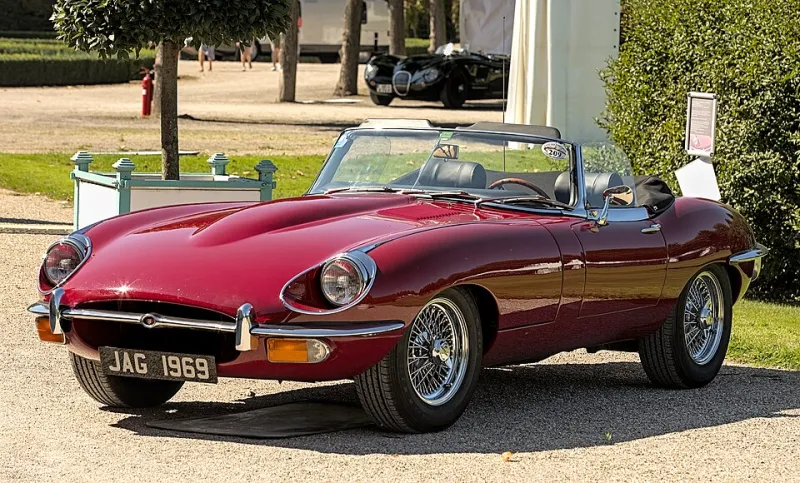
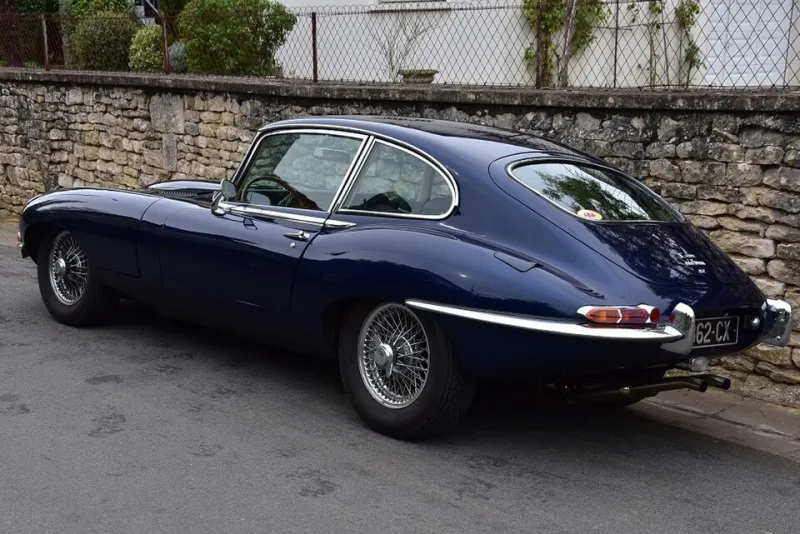
- All four three-quarter views, in daylight, car clean, cover off the wheels.
- Sills, both sides, from low down. Get the rear of the sill where it meets the wing, because that is where the truth lives.
- Floorpans and the boot floor from underneath, on ramps.
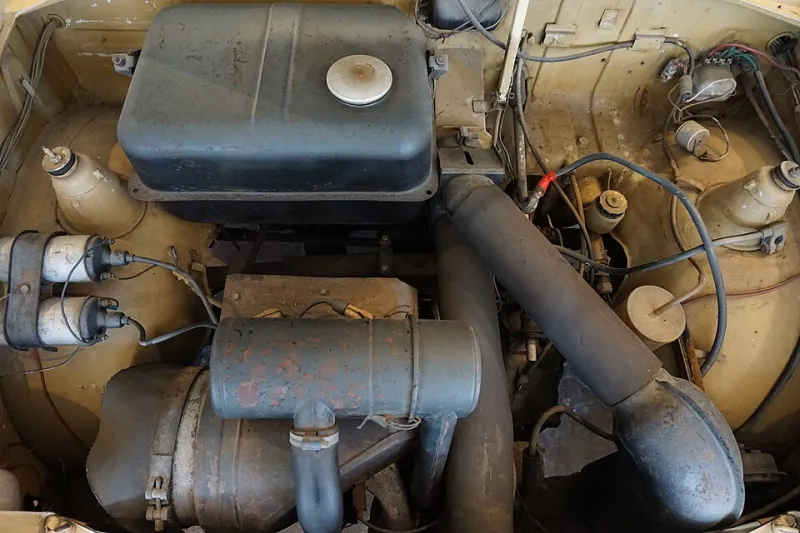
- Engine bay, top and sides.
- Interior, including the seats and the dash top.
- Odometer, close enough that the mileage is legible.
- Chassis and identification plates, and the body tag if your car still wears one.
- Any recent restoration work — new hood, fresh loom, rebuilt carbs, whatever has been done.
Now the important bit: be honest about the bad news. Photograph the blister on the sill rather than cropping around it. A valuation built on flattering angles collapses the moment an assessor sees the car, and a claim built on a flattering description is worse than no claim at all. An honest record of condition tends to produce a fairer number than a hopeful one, because it survives scrutiny.
Build the folder that does the arguing for you
Photographs tell the story; invoices prove it. This is where the E-Type owner who keeps a scruffy ring binder quietly wins.
Keep every invoice. Engine rebuild, gearbox refresh, chrome, wiring loom, hood, radiator recore, suspension bushes — the lot. Scan them, name the files sensibly, and keep a single-page summary of the major work with dates. Your own labour is not a claimable cost, but the parts you bought are, and the paper trail is what demonstrates that this is a maintained car rather than a stalled project.
A running work log is worth the ten minutes a month it takes. Date, mileage, job, parts used. It also doubles as a service history, which is a lovely thing to hand over if you ever sell.
One more point on parts prices: they only travel in one direction. An invoice from 2018 for a set of chrome is evidence of spending, not evidence of current replacement cost. Note down roughly what the same items cost today, because that is the number that matters when you are arguing about whether a repair is economic.
For higher values, many schemes will want a valuation from a recognised club or an accredited valuer rather than your own optimistic estimate. The Jaguar clubs have routes for this, and a specialist E-Type restorer will usually provide a written valuation for a sensible fee. Treat it as part of the winter maintenance budget, right alongside the oil and the filters.
Mileage, laid-up cover and the small print that bites
Limited-mileage policies are the backbone of classic insurance and they are excellent value — provided the number is realistic. Be honest about annual mileage. MOT records and service invoices have a habit of disagreeing with a wildly optimistic declaration, and a compromised claim is a miserable thing to discover at the worst possible moment.
Laid-up or dormant cover is a sensible winter economy, but read what it actually includes. Many such policies strip out accidental damage and cover fire and theft only, and some require the car to be off the public road. That matters if you are planning a winter of spannering: a dropped spanner on a fresh bonnet is accidental damage, and you may not have it.
Two more clauses deserve a slow read:
- Salvage retention. If the worst happens, can you buy the remains back at a pre-agreed percentage? For an E-Type, the answer should almost always be yes, because the parts value alone justifies it.
- Modifications. A five-speed conversion, uprated brakes, electronic ignition, a different radiator — declare them. Some will raise the agreed value; all of them, if undisclosed, can give an insurer a reason to walk away from a claim.
Do not shop on price alone
Comparison sites were not built for cars like ours. A cheap quote that offers market value rather than agreed value, no salvage retention and a punitive excess is not a bargain; it is a lottery ticket with your restoration on it.
Equally, do not assume that any specialist policy is automatically the right one. Ask three plain questions: Is the figure agreed or is it market value with an uplift? What happens to the salvage if the car is written off? And what must I do at renewal to keep the figure current? If the person on the phone cannot answer clearly, that tells you something.
Finally, if you are quoted a figure that has not moved in four years while E-Type values and restoration costs have, query it. The worst outcome is a polite no.
This weekend's half-hour
None of this is regulated financial advice — it is a bloke with a clipboard and a camera. But the routine is genuinely small:
- Wash the car or at least wipe the panels down, then shoot the photo set listed above.
- Pull the invoices into one folder and update the one-page work summary.
- Write down the current cost of the three most expensive parts on the car.
- Check the declared mileage against your records and adjust if needed.
- Read the schedule properly, particularly the salvage and modification clauses.
- Send the whole lot to your broker with a short covering note before renewal, not after.
Half an hour with a camera and a folder is cheaper than a sills job and considerably cheaper than discovering, mid-shunt, that the car was insured as a tidy 2+2 rather than the restored, rebuilt, cherished thing sitting in your garage. Then you can put the cover back on, pour a tea and get on with the actual work — which is the whole point of keeping an E-Type in the first place.