Fog Lights of a Different Sort: Demisting an E-Type in a Wet 2026 Winter

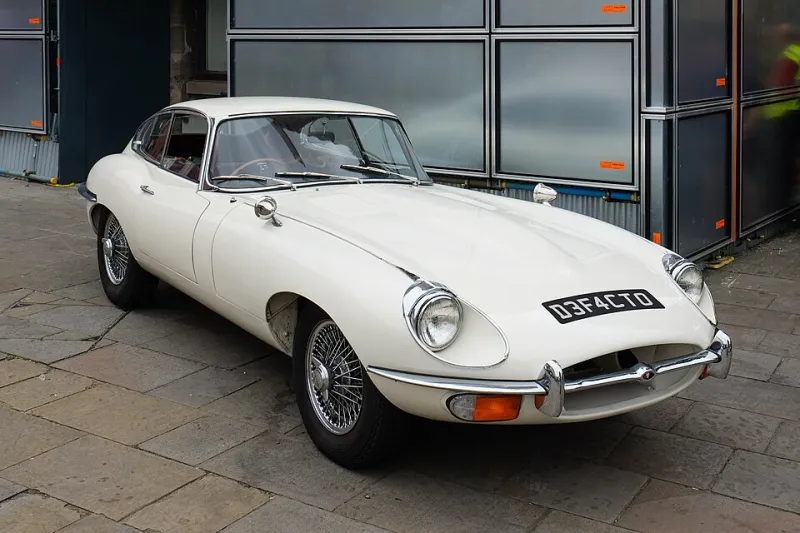
Photo: Alexander Migl, CC BY-SA 4.0, via Wikimedia Commons
There is a particular kind of optimism that comes from settling into an E-Type on a wet November morning, wiping a circle in the windscreen with your sleeve and telling yourself it will clear once you get moving. Usually it does not. Usually you spend the first three miles peering through a letterbox of clarity while the rest of the glass does an impression of a bathroom mirror.
The E-Type’s demisting system is not complicated, but it is only as good as its weakest seal, cable or blower. Treat it as a small system to be brought back to health rather than a mystical property of old cars, and a wet 2026 winter becomes much less dramatic.
Start With the Heater Valve, Not the Blower
The heater valve on the bulkhead is the first suspect. It is cable-operated, it lives in a hostile place, and it often sulks. With the engine warm, work the heater lever through its full travel and feel the two hoses at the valve. If both stay lukewarm when the lever is at hot, the valve is not opening properly, or the cable has stretched and is no longer doing the pushing.
Do not simply force the lever. Check the cable route, the trunnion and the valve itself. A valve that is half-open gives you lukewarm air, which is exactly the wrong thing for demisting. You want heat and airflow, not a gentle suggestion of both. If the valve is original and crusty, a rebuild kit or a good quality replacement is money well spent.
Give the Blower a Reason to Work
The blower motor sits in the heater box and is often forgotten until the first foggy morning. Check the fuse first, then put a meter on the feed at the motor. If you have power but no action, the motor is seized or the brushes are tired. A squealing blower is not long for this world either.
Airflow matters as much as heat. A weak blower will demist a small patch and leave the rest of the screen to its own devices. While you are in there, clear the intake of leaves and debris. It is amazing how much of a British autumn can end up in a heater box.
Ducts, Seals and the Path of Least Resistance
Old foam seals around the heater box and demister ducts turn to dust. Air then takes the easy route into the footwells instead of up to the screen vents. With the blower running, feel around the duct joints for leaks. A little closed-cell foam tape can make a surprising difference.
Check that the demister vents are actually aimed at the glass and that the ducting has not come adrift under the dash. On a car that has been apart for restoration, this is a common oversight. The system can be working perfectly and still be blowing warm air at the back of the dashboard.
Water In, Mist Out
You cannot demist a cabin that is letting water in. Before blaming the heater, check the obvious: perished screen rubber, blocked plenum drains, wiper spindle seals and the condition of the door seals. A damp carpet and a misty screen are old friends.
If the screen rubber is tired, fix it. If water is collecting in the plenum, clear it. A dry cabin is half the battle. Leave a dry towel or a couple of reusable dehumidifier bags in the car between drives, but do not treat them as a cure for a leak. They are a helpful habit, not a waterproofing strategy.
Small Habits That Keep the Glass Clear
On a wet morning, start the engine, set the heater to hot and the blower to its highest working speed, and direct everything at the screen. Crack a window or a quarterlight slightly to give the moist air somewhere to go. Do not immediately set off with the cabin sealed up and the heater on recirculation, if your car has been modified that way. Fresh air is your friend.
Keep a clean microfibre cloth in the car. A dirty rag simply smears the glass with oil and makes the fogging worse. Wipe the screen when it is cold, not after you have been breathing on it for ten minutes.
A Realistic 2026 Routine
My own routine is simple. On a wet morning I start the car, put the heater lever to hot, switch on the blower and open the driver’s window an inch. I wipe the screen once with a dry microfibre, then leave it alone. By the time I am out of the village, the screen is usually clear enough. If it is not, I stop and investigate rather than driving by braille.
An E-Type will never demist like a modern car. It does not need to. With a working valve, a healthy blower, sealed ducts and a dry cabin, it can be perfectly usable in a British winter. The trick is to sort the system properly, then use it with a bit of common sense. And keep the sleeve-wiping to a minimum.