Five Projects I'd Leave in the Lock-Up (And the One Scruffy E-Type I'd Still Buy)

Photo: tired classic Jaguar E-Type project car in garage with parts around, via c8.alamy.com
A softening market does strange things. When E-Type values climbed, the cars that came to market were the good ones — nobody was selling a half-finished project at the top. Now that prices have come back to something resembling sense, the classifieds are full of cars that were parked in 2019 with the best intentions and never moved again. Some are genuinely lovely opportunities. Most are somebody else's abandoned problem, and the seller knows it.
I've been to see eleven project E-Types in the last two years. I've bought none of them, and I don't regret a single walk-away. Here's my personal blacklist — and the one car I'd still drive home tomorrow.
1. Fresh paint over old sills
The photos will show a car with gleaming outer sills and a fresh coat of underseal. Ask for the pictures from before. Outer sills on an E-Type are covers over the structural inner and middle sills, which means they are the easiest thing in the world to fill with wob and blow over.
Take a magnet — it won't stick to filler. Tap along the length with a knuckle and listen for the dull thud. Then get underneath, shine a torch up into the sill drain slots and poke the inner sill with a screwdriver you don't mind bending. If the seller won't let you poke it, that's your answer, and you can be on the A46 home before the kettle boils.
2. Missing identity tags
An E-Type's identity lives in more places than a V5C: the chassis plate on the picture frame, the body number tag, the stamping on the frame, the engine number above the oil filter, the gearbox number. Re-shells and left-to-right conversions all leave traces, and most of them leave them in those five places.
A missing plate isn't automatically fatal — plates get lost, frames get replaced in period. A missing plate on a freshly painted car is a different matter. It usually means somebody didn't want it checked. Walk, and don't let a nice interior talk you out of it.
3. 'Almost complete' boxes of parts
'Almost complete' is a phrase that should make you reach for a calculator rather than your wallet. Because 'almost' on an E-Type can mean the hood frame, the glass, the chrome, the interior kit, the wiring loom and a pair of carburettors.
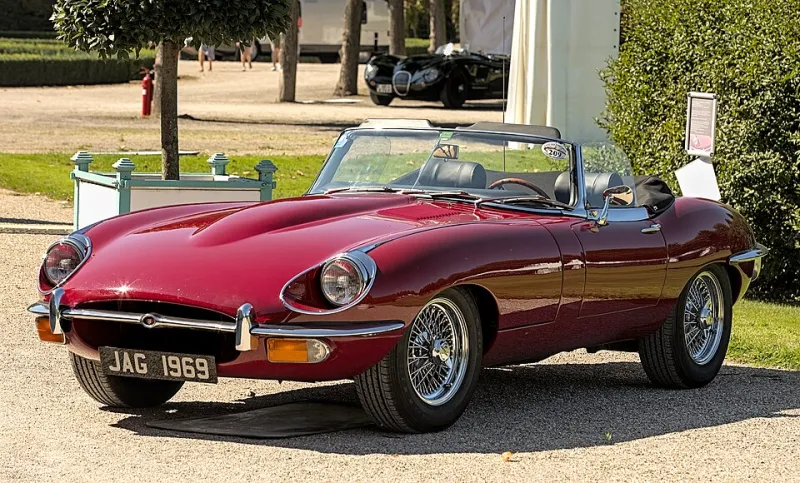
Price the missing pieces before you agree a price on the car. A roadster's soft-top frame alone can run to four figures, and that's before you find out the windscreen chrome is unobtainium in the condition you want. A cheap project with a £6,000 shopping list is not a cheap project.
4. The over-restored car with no file
Everything is new. Everything is shiny. There are no receipts, no photographs of the work, and the restoration was 'done by a mate who knows Jaguars'. Fresh paint is a question, not an answer — what's under it, what was cut out, what was plated over?
A proper restoration generates a shoebox of invoices and a thousand photographs, because the person doing it is as obsessed as you are. A car with no file is a car with no story, and when you come to sell, the buyer will ask exactly the questions you didn't. Buy the paperwork as much as the motor car.
5. The bargain import with no UK paperwork
Grey imports look cheap until you add up the admin. No V5C, no evidence of customs clearance, no dating certificate, no history. Registering a US import means duty and VAT on the landed value, a V55/5, a dating certificate from the Jaguar archive, and — depending on the car and the mood of the day — a fair amount of patience with the DVLA.
Then there's the small matter of it being left-hand drive and quite possibly an automatic 2+2 when what you actually wanted was a manual coupé. A car at £18,000 that needs £4,000 of paperwork and £6,000 of conversion is not a bargain. It's a £28,000 car with a story you'll be telling for years, and not the good kind.
The one I'd buy
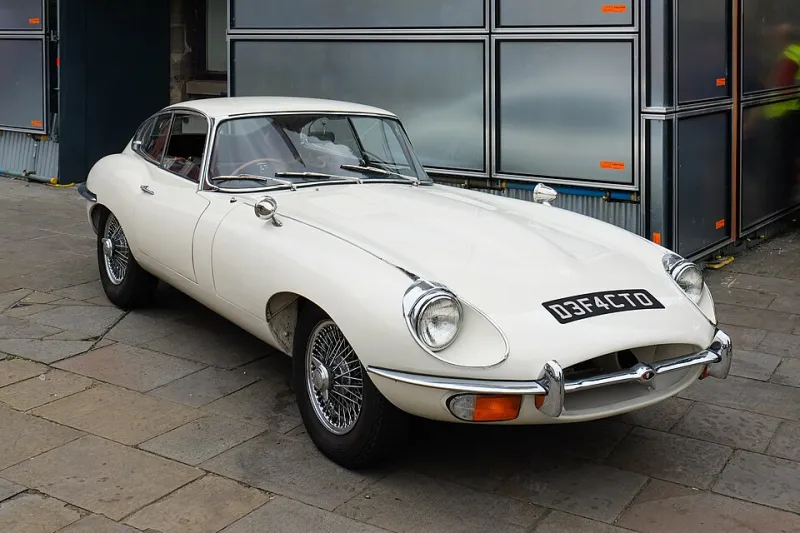
Give me a scruffy Series 2 fixed-head with continuous UK history, original engine, tired paint with honest stone chips, and an interior that smells of old leather rather than air freshener. Rust in the usual places, documented, photographed, priced in. A folder of MOTs going back to the nineties. A seller who tells you about the whine from third gear before you find it yourself.
I'd pay over the odds for boring. Matching numbers, a thick folder, and a car that has clearly been used rather than curated. Because everything on that car is fixable at a rate you can plan for, and nothing about it is a surprise waiting under two grand's worth of cellulose.
The projects I regret aren't the ones I walked away from. They're the ones I nearly bought because the paint was nice and the seller was charming. Trust the magnet, read the folder twice, and remember that the cheapest E-Type is rarely the one with the lowest asking price.